Chapter 1 Introduction: New standards for pressure protection in drilling operations
In the demanding environment of modern oil and gas drilling operations, precise control of wellbore pressure is not only a technical requirement but also the cornerstone for ensuring operational safety, equipment integrity, and economic efficiency. As core components of the circulation system, drilling mud pumps (Slush Pumps) and mud manifold systems operate continuously under high-pressure conditions, constantly facing the threat of overpressure incidents. Any uncontrolled pressure surge could lead to catastrophic damage to expensive equipment, complex downhole situations, and costly non-productive time (NPT). Industry analysis indicates that offshore drilling platforms experience an average of 27 days of unplanned downtime annually, resulting in economic losses of up to $38 million. Even brief downtime can incur costs reaching millions of dollars.
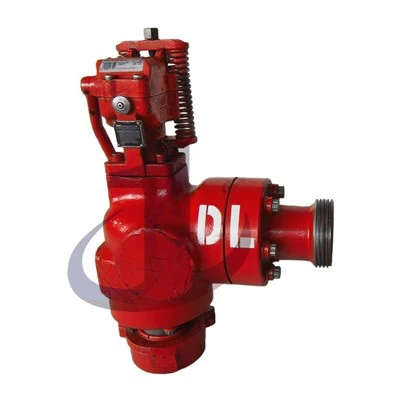
In this context, the OTECO 3 Type "RR" 5000PSI manual reset safety valve was developed. It is not merely a passive pressure protection component, but rather an active safety and efficiency assurance system tailored for mainstream drilling operations. The design philosophy of this valve aims to fundamentally address inherent flaws in traditional safety devices (such as shear pin safety valves), including single-point failure and mandatory shutdowns for maintenance.
This technical summary provides an in-depth analysis of the OTECO Type "RR" safety valve. Its exceptional performance stems not from a single technological breakthrough, but rather from the synergistic integration of three key elements: advanced manufacturing processes, strategic material science, and revolutionary operational design. The analysis demonstrates that this valve represents a paradigm shift from consumable, high-risk-of-shutdown safety devices to reusable, highly-reliable systems, delivering unparalleled safety, operational continuity, and superior economic value to global drilling contractors and operators.
Chapter 2 Sudden pressure relief mechanism: instant response and zero stop reset
The core advantage of OTECO's "RR" type safety valve lies in its unique working principle, designed to achieve the fastest pressure response and maximum operational continuity. The design essence is embodied in two key features: "Snap-Acting" and "Manual Reset", which together form an efficient and reliable pressure protection closed-loop system.
The physical principle of instantaneous pressure relief
Unlike conventional regulating valves with gradual opening mechanisms, Type "RR" valves utilize a rapid-opening mechanism. This system operates through precise mechanical equilibrium: Under normal conditions, the piston within the valve is compressed by a preloaded spring assembly, maintaining tight contact with the sealing seat to create a reliable pressure barrier. When pipeline pressure exceeds the preset threshold, the total fluid force acting on the piston's base instantly overcomes the spring's preload.
When this critical threshold is breached, the mechanical equilibrium is disrupted. The valve's internal mechanism then drives the piston to rapidly "spring open" from the fully closed position to the fully open position. This instantaneous, full-diameter opening mechanism is crucial as it creates maximum pressure relief channels in the shortest time, swiftly releasing destructive pressure waves. A deeper engineering consideration lies in this design's exceptional protection for the valve's most vulnerable components. Drilling mud, being a highly abrasive fluid, causes abrasive erosion on seals and valve seats during high-speed flow through the valve. The instantaneous mechanism compresses this high-velocity erosion process to the minimum duration, significantly reducing wear on critical sealing surfaces (piston seal and valve seat), thereby substantially extending maintenance intervals and the valve's overall service life.
Advantages of manual reset operation
The manual reset feature represents a revolutionary advancement that distinguishes Type "RR" valves from traditional safety valves with shear pins. When overpressure occurs, the valve opens and completes pressure relief without requiring operators to stop mud pumps or disassemble the system. After confirming the system pressure has dropped to a safe level, operators can reset the valve to standby status within seconds using the external reset handle. This design fundamentally eliminates downtime caused by shear pin replacements, reducing what was once a 30-90 minute maintenance process to a simple one-minute operation.
Additionally, the valve is equipped with a manual release button. Regardless of pressure conditions, operators can simply press this button to forcibly open the valve, providing enhanced safety and operational convenience during system testing, pipeline venting, or emergency situations. The placement of the release button also visually indicates the valve's open/closed status, offering clear visual guidance for field personnel.
Set the precision and stability of the point
The pressure relief setting is precisely adjusted via a regulating nut at the valve cover's top, featuring a straightforward adjustment process with clear pressure indicators displaying multiple units including pounds per square inch (PSI), bar (Bar), and kilopascals (kPa) to accommodate regional operational standards. Crucially, its internally designed locking and pre-tightening mechanism ensures stable pressure settings remain unaffected by intense drilling vibrations or pipeline pressure fluctuations, preventing drift and guaranteeing precise, repeatable pressure relief operations.
Chapter 3 Blueprint for durability: advanced manufacturing and materials science
The exceptional durability and reliability of OTECO's "RR" type safety valves stem from uncompromising manufacturing processes and material selection. Each component is designed and produced through systematic engineering principles, forming a robust whole capable of withstanding multiple challenges including high pressure, corrosion, and wear. This "defense-in-depth" strategy ensures the valves maintain long-term, maintenance-free reliable operation even in the most extreme oilfield environments.
3.1 Precision foundation: investment casting and horizontal machining center
The core components of valves, such as the structurally complex valve cover, utilize **investment casting** technology. Compared to traditional sand casting, this method enables the production of "near-net formed" components with exceptionally high dimensional accuracy (tolerance reaching
With a surface finish of ±0.005 inches (typically 125 Ra compared to sand-cast's 250 Ra) and exceptional batch consistency, this ensures tighter valve component fits. By minimizing mechanical stress caused by cumulative tolerances, it significantly enhances operational smoothness and durability.
Building upon this foundation, all critical components undergo final processing using **single-clamp high-precision horizontal machining centers (HMC)**. The single-clamp technology eliminates cumulative errors caused by repeated workpiece positioning, ensuring precise alignment between core components such as pistons, valve bodies, and bonnets. This micron-level precision is essential for achieving reliable sealing and smooth mechanical operation under high pressure, serving as the fundamental guarantee for the valve's long-term stable performance.
3.2 Core strength: high grade alloy steel and forging process
In high-pressure fluid control systems, valve bodies serve as critical components that withstand system pressures. The material strength and structural integrity of these components directly determine operational safety. Industry best practices indicate that for critical applications requiring 5000 PSI or higher, forged valve bodies are the preferred solution to ensure maximum strength. This is because forging eliminates internal pores that may exist in castings and creates optimized grain flow patterns, resulting in mechanical strength and fatigue resistance far superior to those of cast products.
The valve body and seat of OTECO Type "RR" valves, as core pressure-bearing components, are constructed from AISI 4130 low-alloy steel. This chromium-molybdenum alloy steel, widely used in the oil and gas industry, is renowned for its exceptional tensile strength (over 655 MPa after quenching and tempering), outstanding toughness, and excellent weldability.
In environments containing hydrogen sulfide (H2S) and acidic gases, material selection and processing must adhere to the stringent NACE MR0175 international standard. OTECO's Sour Gas service valves feature all fluid-contact metal components that strictly comply with this standard. This ensures not only rigorous control over material composition but also mandatory heat treatment processes (such as normalizing, austenitizing, and tempering), with final hardness precisely controlled below Rockwell hardness 22 HRC. These measures fundamentally eliminate the risk of sulfide stress cracking (SSC).
3.3 Multi-layer defense: special materials and protective coatings
OTECO has adopted a multi-level protection strategy for material applications to cope with complex corrosion and wear environments:
Corrosion resistance of core components: The key moving parts inside the valve -- the piston, made of stainless steel, take advantage of its inherent corrosion resistance to resist the chemicals in the drilling fluid.
Sacrificial anode protection: Valve seat (Sub) and other components undergo cadmium plating treatment, while the valve cover assembly employs Gullite coating. These coatings act as sacrificial anodes, being preferentially consumed in corrosive environments to protect the underlying base metal, thereby significantly extending component service life.
Internal functional coating: The valve's internal flow channel surface is coated with Xylan. As a high-performance fluoropolymer coating, Xylan forms a robust, smooth dry film on metal surfaces. This coating features an extremely low friction coefficient that effectively reduces resistance during piston movement. Additionally, its excellent wear resistance and chemical inertness enable effective isolation from corrosive drilling fluids, preventing erosion of the valve's inner walls. These combined benefits significantly enhance the valve's durability and operational efficiency.
This systematic engineering approach, from material selection and manufacturing process to surface treatment, contributes to the unmatched strength and reliability of the OTECO Type "RR" safety valve, making it an ideal choice for ensuring the safe operation of demanding drilling operations.
Chapter 4 Sealing integrity: a solution tailored to harsh service environments
The performance of safety valves is fundamentally determined by the integrity of their sealing systems. In high-pressure and highly abrasive drilling environments, sealing components must withstand extreme physical and chemical challenges. OTECO has developed two specialized sealing material configurations for Type "RR" valves – Standard Service and Sour Gas Service – through deep understanding of the varying requirements for sealing materials under different operating conditions, ensuring durable and reliable sealing performance in any environment.
Standard service configuration scheme
For conventional drilling operations, OTECO's sealing solutions focus on achieving the best balance between durability, wear resistance and cost effectiveness:
Main Seal (Outer Seal): Utilizes Ultra-High Molecular Weight Polyethylene (UHMWPE). This high-performance thermoplastic engineering material, distinct from conventional rubber elastomers, is selected as the primary sealing component due to its unparalleled wear resistance and exceptionally low friction coefficient among polymers. When directly exposed to drilling mud containing solid particles such as sand and cuttings, UHMWPE effectively resists abrasive wear, ensuring long-term sealing effectiveness.
Cushion Ring vs. O-Ring: Made from NBR. NBR is renowned for its exceptional resistance to petroleum-based hydraulic fluids, fuels, and lubricants, making it one of the most widely used elastomers in oilfield equipment. In standard applications, it serves as both cushion rings and static sealing O-rings, delivering reliable sealing performance and excellent mechanical flexibility. This combination makes it a proven and cost-effective choice that delivers high performance at a competitive price.
Acid gas (H2S) service configuration scheme
In an acidic environment containing hydrogen sulfide (H2S), materials must have special resistance to chemical corrosion to meet the requirements of NACE MR0175. To this end, OTECO has upgraded its sealing materials:
Primary and Internal Seals: Utilize Hydrogenated Nitrile Butadiene Rubber (HNBR). HNBR is a specialized elastomer produced through catalytic hydrogenation of NBR. This process saturates the double bonds in the NBR molecular chain, resulting in significant improvements in heat resistance, chemical resistance (particularly against H2S, amine corrosion inhibitors, and steam), and ozone aging resistance. In acidic environments, HNBR maintains its physical properties and sealing integrity far superior to standard NBR.
Valve seat to valve body O-ring: Utilizes fluororubber (Viton/FKM). Viton is recognized as the premium choice among sealing materials, surpassing HNBR in both maximum operating temperature and chemical resistance. When applied at the critical static sealing interface between valve seat and valve body, it establishes the highest-level chemical defense barrier for the entire sealing system, ensuring leak-proof performance even in the most challenging acidic environments.
The table below clearly summarizes the material differences and performance advantages of the two service types on the key seals, and visually shows the specialized engineering solutions OTECO provides for different application scenarios.
Table 1: Specifications and performance characteristics of OTECO Type "RR" valve sealing materials
|
seal assembly |
Standard service materials |
Key performance |
Acid gas (H2S) service materials |
Key performance |
|
Outer Seal |
UHMWPE (polyethylene) |
Extreme wear resistance, low friction coefficient |
HNBR (Hydrotreated NBR) |
Excellent resistance to H2S, chemical and heat |
|
Cushion Ring |
NBR (butadiene nitrile rubber) |
Good oil/fuel resistance, good flexibility |
HNBR (Hydrotreated NBR) |
Excellent resistance to H2S, chemical and heat |
|
Valve seat to valve body O-ring |
NBR (butadiene nitrile rubber) |
Reliable sealing, good oil resistance |
Viton (FKM/fluororubber) |
Excellent high temperature resistance and wide range of chemical resistance |
Chapter V Certification performance: specifications, standards and third-party accreditation
For critical safety equipment used in the oil and gas industry (particularly on highly regulated offshore platforms), its performance parameters and compliance must be verifiable and validated by authoritative institutions. The OTECO 3 Type "RR" 5000PSI safety valve not only features a series of outstanding engineering designs but has also undergone rigorous review and certification by the world's most recognized classification societies, providing users with the highest level of confidence assurance.
Comprehensive performance specifications
The table below summarizes the key technical parameters of the valve, providing engineers and purchasing managers with a quick and accurate reference. All data are from official product manuals and technical catalogs to ensure the authority of the information.
Table 2: OTECO 3 Type "RR" 5000PSI Valve-Key technical specifications
|
parameter |
specifications |
|
model |
Type "RR" manual reset safety valve |
|
size |
3 inches |
|
working pressure range |
400 - 5,000 PSI (28 - 350 Bar) |
|
maximum working pressure |
5,000 PSI |
|
type of service |
Standard service, acid gas (H2S) service |
|
Rated temperature range |
-20°F to 250°F (-29°C to 121°C) |
|
attended mode |
Pipe thread (LPT), API flange, FMC Weco by壬 (e.g. Fig 1502) |
|
attestation |
DNV type certification (5 models), ABS design evaluation (12 models) |
Third party authoritative verification
The OTECO Type "RR" valve is the ultimate proof of product quality and reliability. It holds two of the most prestigious certifications in the industry:
DNV Type Approval: DNV (Dynamical Nautical Commission), a global leader in risk management and quality assurance, offers the most prestigious certification in maritime and offshore oil & gas industries. Obtaining DNV Type Approval signifies that a valve's design specifications, material standards, manufacturing processes, and quality control systems have undergone rigorous evaluation by DNV experts, confirming full compliance with International Maritime Organization (IMO) regulations, industry benchmarks, and DNV's stringent protocols. This certification validates the valve's capability to operate safely and reliably in the harshest marine environments. OTECO boasts five "RR" type valves certified under this program, demonstrating comprehensive regulatory compliance across its product portfolio.
ABS Design Assessment (ABS): As a leading global standard-setter and certification body for maritime and offshore energy industries, ABS (American Bureau of Shipping Inspection) validates that products meet its safety, quality, and reliability standards through its design assessment certification. Obtaining ABS certification is typically mandatory for any equipment intended for installations on ABS-certified drilling vessels, semi-submersible platforms, or fixed platforms. Notably, the OTECO Type "RR" valves have seen over 12 models pass ABS design evaluations, significantly streamlining integration and acceptance processes on certified platforms while saving clients valuable time and certification costs.
These authoritative endorsements from DNV and ABS are not only an affirmation of the quality of OTECO's products and engineering, but also a clear signal to customers around the world that choosing an OTECO Type "RR" safety valve is choosing a trusted safety solution that has been validated by the highest global standards.
Chapter VI OTECO Advantages: Comparative analysis of operation and economic value
To evaluate the true value of safety equipment, one should not limit themselves to procurement costs alone, but rather focus on its profound impact on operational efficiency, safety, and Total Cost of Ownership (TCO) throughout the product's lifecycle. The OTECO Type "RR" Manual Reset Safety Valve delivers quantifiable economic benefits and operational advantages for drilling operations through its revolutionary design. More than just hardware, it serves as both a risk mitigation tool and an efficiency multiplier that amplifies productivity.
6.1 Reset vs. Snap-action: True cost of downtime
The core value of the OTECO RRV is that it fundamentally eliminates non-productive time (NPT) caused by pressure relief compared to traditional poppet-type safety valves (PRVs). This can be clearly understood by comparing the operational procedures of the two valves after an overpressure event:
Shut-off safety valve (PRV) workflow:
In case of overpressure, the shear pin is cut and the valve is opened to discharge pressure.
The mud pump must be stopped and the whole drilling operation suspended.
depressurize the mud pipe fitting.
Remove the valve top cover.
It takes time to find and clean up all the metal pin fragments that have been cut up in the valve chamber.
Install new scissor bars.
Reinstall and tighten the top cover.
Repressurize the system.
Restart the mud pump and resume drilling operations.
Estimated downtime: Depending on site conditions and operational proficiency, the entire process typically requires 30 to 90 minutes of non-production time.
OTECO manual reset safety valve (RRV) workflow:
Overpressure occurs, and the valve opens momentarily to discharge pressure.
System pressure automatically or manually reduced to a safe level.
The operator pulls the reset handle, and the valve is immediately reset.
Estimated downtime: less than 1 minute, and in most cases no need to stop the mud pump.
Economic impact analysis:
This fundamental shift in operational protocols directly translates into substantial economic benefits. In the drilling industry, time is money. Land-based rigs can charge tens of thousands of dollars per day, while offshore platforms face staggering downtime costs that easily exceed $1 million daily4. Simply avoiding a single downtime incident caused by shear pin replacement could fully offset-or even surpass-the initial investment gap between OTECO RRV and conventional shear pin valves. Therefore, adopting OTECO RRV isn't about adding costs-it's about making a smart investment that maximizes drilling uptime while minimizing operational disruptions.
6.2 Superior alternatives: comparison with the Cameron Type "B" valve
The Cameron Type "B" safety valve is a mature product with a broad user base in the market. When designing the OTECO Type "RR" valve, we carefully considered this market landscape and made a strategically visionary decision: to ensure complete compatibility and interchangeability between its valve cover assembly and Cameron's Type "A" and Type "B" valves.
This feature provides existing Cameron users with a seamless and low-risk upgrade solution. Without modifying existing pipelines or valve bodies, they can enjoy all OTECO's technical advantages simply by replacing the valve cover assembly. This not only lowers the upgrade threshold and costs but also enables OTECO to directly serve a vast existing market.
The advantages of OTECO Type "RR" over the Cameron Type "B" are as follows:
Higher manufacturing accuracy: The use of the lost foam casting process ensures a high degree of consistency and repeatability of component dimensions, thereby improving overall operational reliability.
Longer material life: Innovative use of advanced sealing materials such as UHMWPE provides excellent wear resistance and significantly extends service life in harsh working conditions.
Stronger protection: Advanced coating technologies such as Gullite and Xylan are applied to provide more comprehensive corrosion and wear resistance protection for valves, reducing maintenance requirements.
More extensive certification scope: With more DNV and ABS certified models, it is proven that its design and manufacturing quality has been widely recognized by the world's top authorities, especially for high specification offshore applications.
In conclusion, the OTECO Type "RR" safety valve not only outperforms the traditional shear pin valve in performance, but also provides users with an excellent alternative solution that is economically and technically attractive through its compatibility with mainstream products and its own technical advantages.
Chapter VII Conclusion: The ultimate choice of drilling safety and efficiency
Through a comprehensive technical analysis of the OTECO 3 Type "RR" 5000PSI manual reset safety valve, it is evident that this product represents not merely an incremental improvement over existing technologies, but rather a systematic innovation rooted in profound industry insights and exceptional engineering expertise. It successfully integrates the fundamental need for pressure safety in drilling operations with the relentless pursuit of operational efficiency and cost-effectiveness.
The excellence of the valve is reflected in its three complementary pillars:
Advanced manufacturing process: By using investment casting and high-precision horizontal machining centers, OTECO ensures that each component has unmatched dimensional accuracy and consistency, laying a solid foundation for the reliable operation and long life of the valve under high pressure.
Strategic materials science: From high-strength AISI 4130 forged valve body, to stainless steel piston, to UHMWPE, HNBR and Viton seals tailored to different working conditions, and multi-layer protective coatings, OTECO has built a comprehensive material defense system that effectively resists the combined challenges of high pressure, corrosion and wear.
Disruptive operation design: The "instantaneous opening" mechanism ensures the fastest and most efficient pressure release while maximizing protection of internal components; while the "manual reset" function eliminates the non-production time caused by traditional safety valves and minimizes the risk of operational interruption.
These technological advantages ultimately translate into core customer value: maximized uptime, significantly reduced operational risks, lower total cost of ownership (TCO), and enhanced on-site personnel safety. Through compatibility designs with mainstream market products like the Cameron Type "B", OTECO further provides customers with a convenient and cost-effective upgrade solution.
In conclusion, the OTECO 3 Type "RR" 5000PSI manual reset safety valve is not only a pressure protection device meeting the highest industry standards (DNV, ABS, NACE), but also a strategic investment that directly enhances drilling project profitability. For any modern drilling operation prioritizing safety, reliability, and financial performance, this solution stands as an indisputably wise choice.
Hot Tags: dl sentinel type rr 3 inch 5000 psl reset safety valve, China dl sentinel type rr 3 inch 5000 psl reset safety valve manufacturers, suppliers, factory