Your Professional DL Relief Safety Valves Supplier
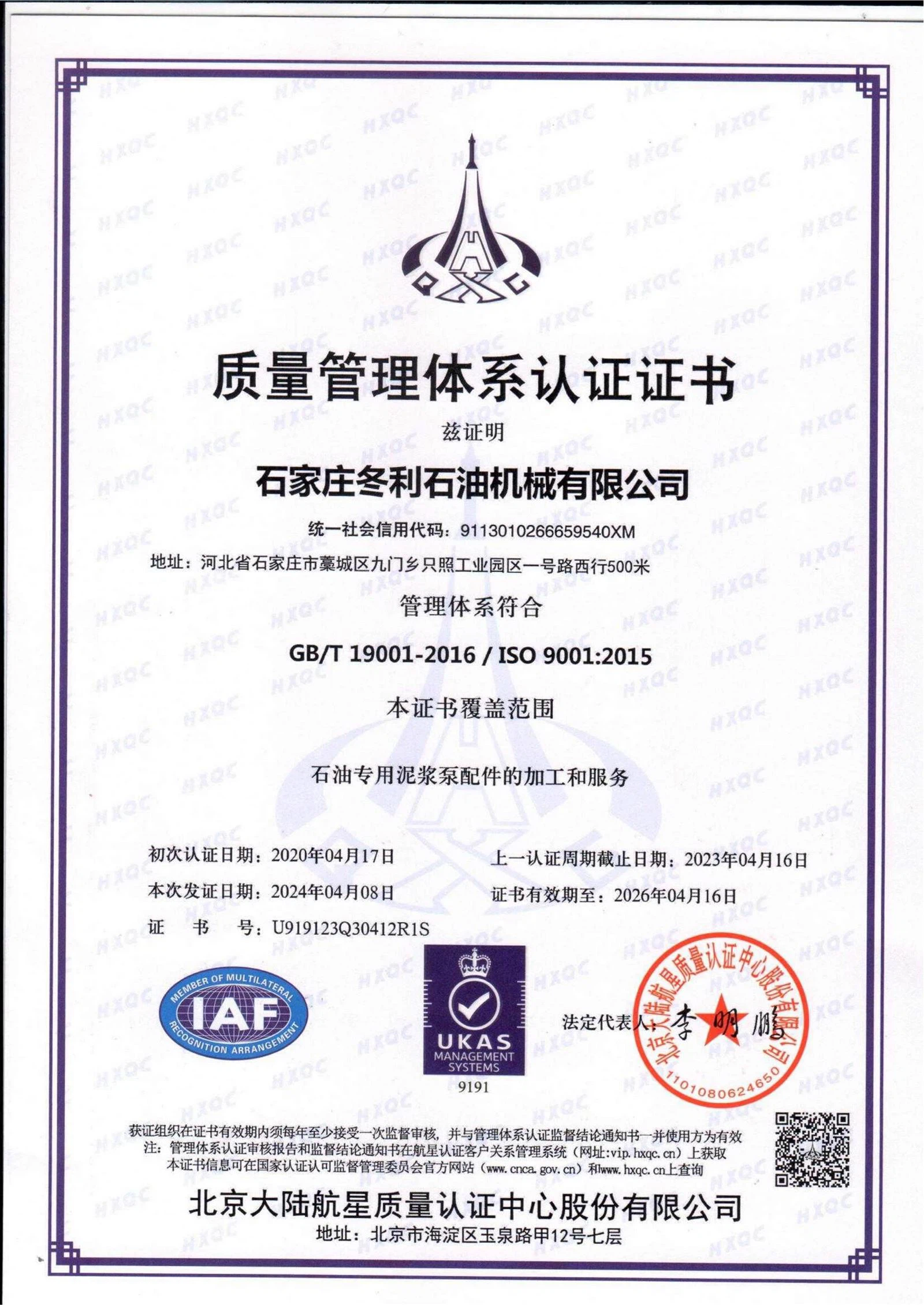
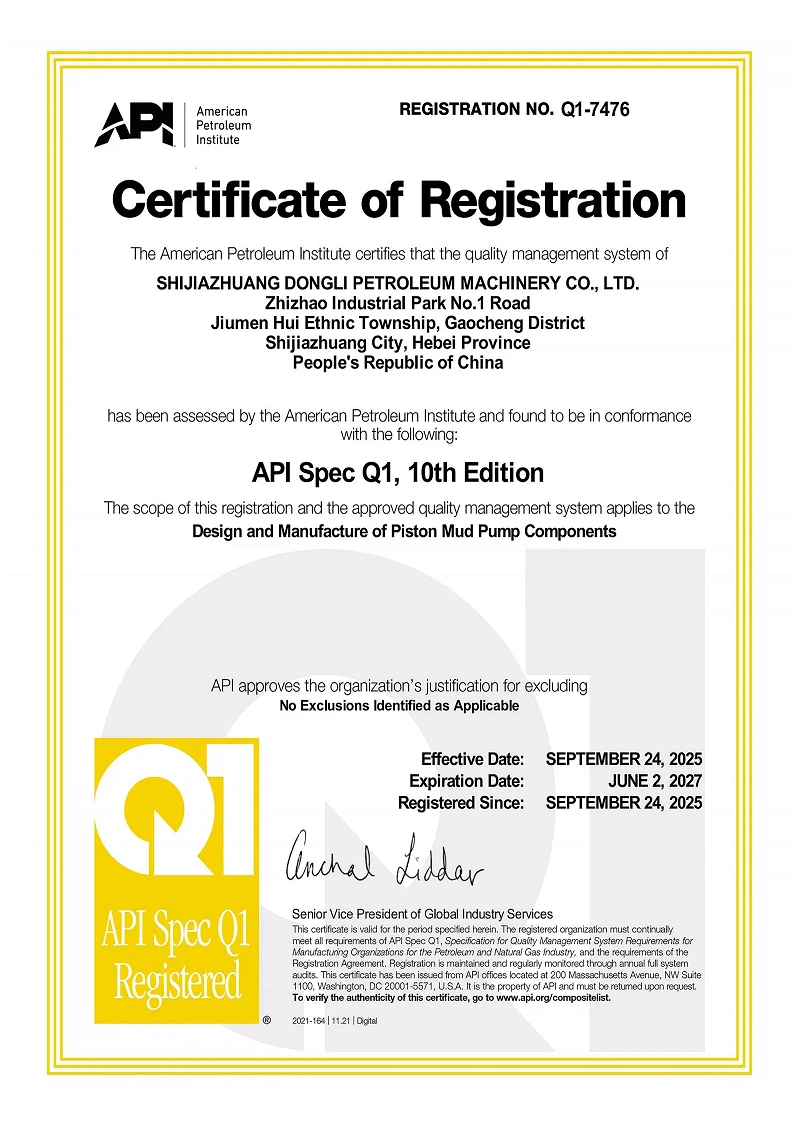
We are a certified manufacturer of mud pumps, plunger pumps, and fracturing pumps, supplying complete pump systems, accessories, and centrifuges for oil drilling, mining, and industrial use. With API 7K and ISO 9001 certification, advanced CNC machining, and full in-house testing, we deliver reliable equipment for high solids, high pressure, and harsh environments. Our products are widely applied in oil & gas drilling, mining slurry transport, environmental engineering, and high-pressure fracturing operations.
Quality Control
Multi-axis CNC machining and complete testing systems ensure consistent quality, verified performance, and full traceability for every critical component.
Global Market Experience
Strong performance in North America, Russia, and the Middle East supports reliable supply and service.
High-Quality Service
From pre-sales engineering analysis to installation, training, and after-sales maintenance, we help customers reduce risk, improve uptime, and extend equipment service life.
-
![DL Sentinel Type C Reset Safety Valve]() DL Sentinel Type C Reset Safety ValveThe trigger mechanism of the Titan C safety valve ingeniously employs the lever principle of a balance beam, which is an extremely reliable and pure mechanical design. We can think of it as a simple
DL Sentinel Type C Reset Safety ValveThe trigger mechanism of the Titan C safety valve ingeniously employs the lever principle of a balance beam, which is an extremely reliable and pure mechanical design. We can think of it as a simple -
![DL Sentinel Type RRV 3 Inch 8000 PSl Reset Safety Valve]() DL Sentinel Type RRV 3 Inch 8000 PSl Reset Safety ValveThe core mechanism of this valve lies in its pop-action pressure relief capability. When pipeline pressure exceeds a pre-calibrated threshold, the hydraulic force applied to the piston instantly
DL Sentinel Type RRV 3 Inch 8000 PSl Reset Safety ValveThe core mechanism of this valve lies in its pop-action pressure relief capability. When pipeline pressure exceeds a pre-calibrated threshold, the hydraulic force applied to the piston instantly -
![DL Sentinel Type B 3 Inch Reset Safety Valve]() DL Sentinel Type B 3 Inch Reset Safety Valve●Material Selection: The valve body is manufactured from high-strength low-alloy steel, typically grade AISI 4130 (chromoly steel). This material is renowned for its exceptional mechanical
DL Sentinel Type B 3 Inch Reset Safety Valve●Material Selection: The valve body is manufactured from high-strength low-alloy steel, typically grade AISI 4130 (chromoly steel). This material is renowned for its exceptional mechanical -
![DL Sentinel Type BX Reset Safety Valve]() DL Sentinel Type BX Reset Safety Valve●Material Selection: The valve body is manufactured from high-strength low-alloy steel, typically grade AISI 4130 (chromoly steel). This material is renowned for its exceptional mechanical
DL Sentinel Type BX Reset Safety Valve●Material Selection: The valve body is manufactured from high-strength low-alloy steel, typically grade AISI 4130 (chromoly steel). This material is renowned for its exceptional mechanical -
![DL Sentinel Type CH Reset Safety Valve]() DL Sentinel Type CH Reset Safety ValveThe NOV Type CH reset safety valve uses an advanced mechanical/hydraulic linkage design to achieve the automatic reset function without manual intervention, which makes it far more convenient than
DL Sentinel Type CH Reset Safety ValveThe NOV Type CH reset safety valve uses an advanced mechanical/hydraulic linkage design to achieve the automatic reset function without manual intervention, which makes it far more convenient than -
![DL Sentinel Type RX Reset Safety Valve]() DL Sentinel Type RX Reset Safety ValveCore working principle: revolutionary breakthrough in patented hydraulic cushioning technology
DL Sentinel Type RX Reset Safety ValveCore working principle: revolutionary breakthrough in patented hydraulic cushioning technology -
![DL Sentinel Type RR 3 Inch 7500 PSl Reset Safety Valve]() DL Sentinel Type RR 3 Inch 7500 PSl Reset Safety ValveMechanical principle of instantaneous protection: analysis of operating mechanism
DL Sentinel Type RR 3 Inch 7500 PSl Reset Safety ValveMechanical principle of instantaneous protection: analysis of operating mechanism -
![DL Sentinel Type RR 2 Inch Reset Safety Valve]() DL Sentinel Type RR 2 Inch Reset Safety ValveThe exceptional performance of OTECO's RR type safety valve stems from its meticulously engineered internal mechanical structure, which ensures instantaneous, decisive, and full-flow response during
DL Sentinel Type RR 2 Inch Reset Safety ValveThe exceptional performance of OTECO's RR type safety valve stems from its meticulously engineered internal mechanical structure, which ensures instantaneous, decisive, and full-flow response during -
![DL Sentinel Type RR 3 Inch 5000 PSl Reset Safety Valve]() DL Sentinel Type RR 3 Inch 5000 PSl Reset Safety ValveIn the demanding environment of modern oil and gas drilling operations, precise control of wellbore pressure is not only a technical requirement but also the cornerstone for ensuring operational
DL Sentinel Type RR 3 Inch 5000 PSl Reset Safety ValveIn the demanding environment of modern oil and gas drilling operations, precise control of wellbore pressure is not only a technical requirement but also the cornerstone for ensuring operational


Parameter
|
Valve Size (V.S.) |
3 inches |
|
Pressure Range |
3,000 - 8,000 PSI (206 - 552 Bar) |
|
Maximum working pressure (Max Working Pressure) |
8,000 PSI (552 Bar) |
|
End Connections) |
3-inch Fig 1502 FMC Weco® by Niren, Flange |
|
Flow Area |
4.9 inch2 (31.6 cm2) |
|
Temperature rating (Temperature Rating) |
-20°F to 250°F (-29°C to 121°C) |
|
Service Types (Service Types) |
Standard conditions, acid gas conditions (H₂S) comply with NACE MR0175 |
|
Weight (Weight) |
325 lbs. (147.4 kg) -by the end |
|
|
367 lbs (166.5 kg) -Flange connection |
|
Certifications |
ABS design assessment (12 models), DNV design assessment (6 models) |
|
Set Pressure Accuracy (SPP) |
+/- 5% |
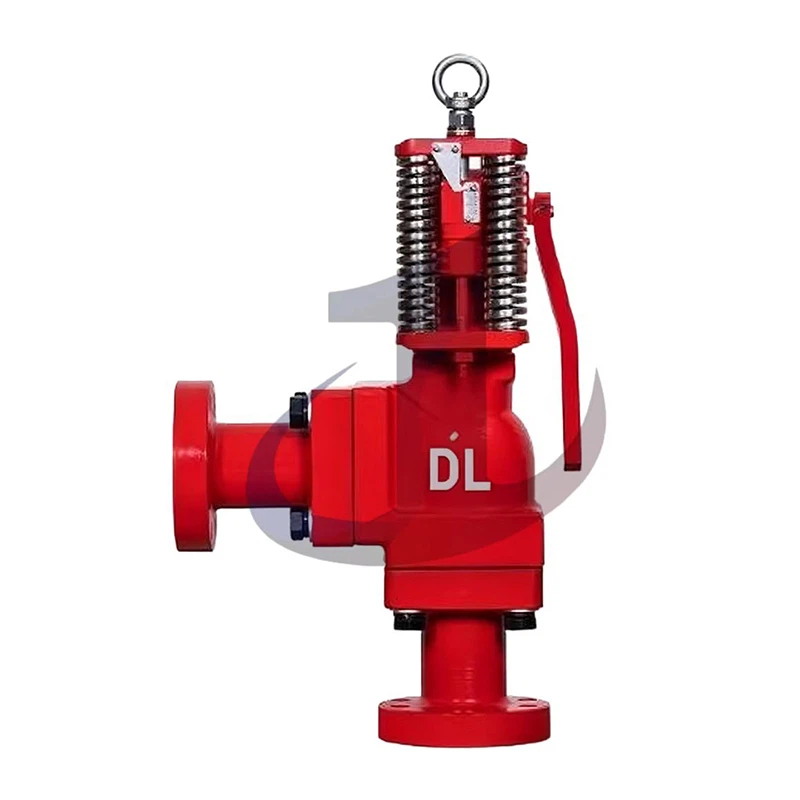
- Reusable design for long-term cost savings
- Designed to relieve excess pressure, reseat, and return to service
- Minimizes damage to other system components
- Longer useful life despite higher initial capital outlay
Industrial applications:
Used in boilers, pressure vessels, pipelines, and other industrial equipment to prevent over pressure.
Marine applications:
Used on ships, boats, and offshore platforms to prevent over pressure in fuel, hydraulic, and other pressurized systems.
Power-generating applications:
Used in power plants, including steam boilers, to prevent over pressure in the steam system.
Petroleum and gas applications:
Used in the petroleum and natural gas industry to prevent over pressure in pipelines and storage tanks.
Aerospace applications:
Used in aircraft and spacecraft to prevent over pressure in fuel, hydraulic, and other systems.
- Cap –The safety valve cap, which may be threaded or fastened to the bonnet with a bolt, is the top portion that conceals the adjustment screw.
- The bonnet is the valve’s central section and contains a stem, spring, buttons, and guide plate. This device could be open or closed.
- Body-The body is the bottom-most part and contains a disc, disc holder, locking nut, and nozzle blow-down ring.
- Adjustment Screw The calibration of a pressure safety valve at a given fixed pressure is attained by adjustment
- Stem-This component distributes the spring force to the disc assembly while also aligning the parts.
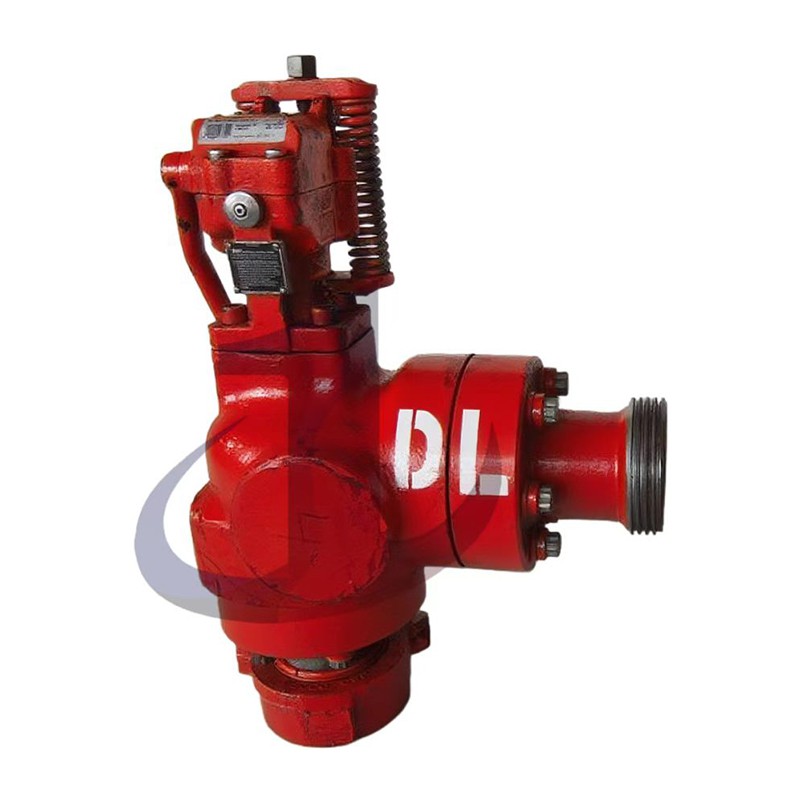

- Spring and spring buttons-.A spring will keep the valve closed and the spring button can evenly distribute pressure.
- Lift lever-Manual pressure release is achieved via the lift lever
- Disc and Disc Holder-This device would be impacted by process pressure and susceptible to galling, erosion, and pitting
- Nozzle-The process fluid enters the valve through a channel called a nozzle. They come in a variety of styles, including fully threaded, and removable, partially threaded and removable, partially welded in the valve body, and partially pressed and removable.
Precautions for Using DL Relief Safety Valves
- Safety valves in the equipment or pipe should be installed upright. But for safety valves set up in liquid pipes, heat exchangers and containers, when the valve is closed, in occasions where the pressure may increase due to thermal expansion, they can be horizontally installed.
- The safety valve should be installed in places where it’s easy to maintain and regulate, and there should be enough work space around.
- There should be no resistance at the outlet of the safety valve to avoid pressure.
- The safety valve should be installed as close as possible to the protected equipment or pipe
- The safety valve should be specially tested before installation and its official tightness should be checked.
- The safety valve in use should be checked regularly.
Packaging and Shipping
|
Packaging |
Standard export plywood case or carton. |
|
Shipping |
DHL, TNT, UPS, FEDEX, and EMS, SF. Air and sea transportation are also supported. |
Our Factory
Shijiazhuang Dong Li Petroleum Machinery Co., Ltd. (DLSY) was founded in 2008 and is headquartered in Shijiazhuang, Hebei Province, China.

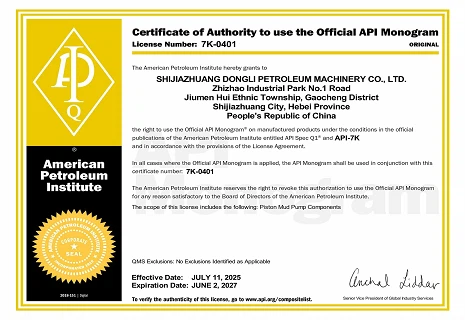
Our Certificates

FAQ
Shijiazhuang Dongli Petroleum Machinery Co., Ltd. is one of the most professional dl relief safety valves manufacturers and suppliers in China, featured by quality products and low price. Please rest assured to buy CE approved dl relief safety valves made in China here from our factory. Contact us for quotation.
Popular Products