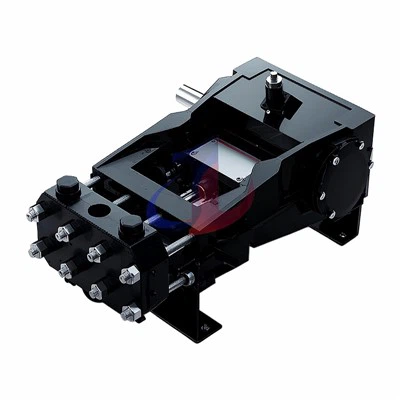
The working principle of fracturing pump is to transfer liquid pressure to pipelines and wellheads, provide high-pressure water pressure for drilling and oil and gas production, maintain wellhead pressure, and thus accelerate oil and gas production. Fracturing pumps use energy such as compressed air, gas or electricity to increase water pressure to thousands to tens of thousands of pounds, inject water into the wellhead through a high-pressure hose, and enter the rock cracks at the bottom, thereby expanding the cracks and increasing oil and gas production.
Fracturing pumps are composed of components such as hydraulic booster system, pump body, water inlet, water outlet, control system, etc. It sucks low-pressure water source into the pump body, turns it into high-pressure water through high-speed rotation of the pump body, and transports it to the oil well through pipelines to achieve oil and gas fracturing.
In actual work, the working process of fracturing pumps is divided into pressurization stage, pressure maintenance stage and recovery stage. In the pressurization stage, the fluid enters the pump body, starts to increase pressure, the pressure gradually increases, and the liquid water enters the rock cracks. In the pressure maintenance stage, the fluid maintains a high-pressure state, which rapidly expands the cracks and promotes the outflow of oil and gas. During the recovery phase, the pressure gradually decreases and the fluid gradually flows back into the pump body, ready to enter the next pressurization cycle.
In short, the fracturing pump plays a key role in the process of oil exploration, development and production. Its main function is to pump high-pressure water into the bottom of the well to increase oil and gas production and improve exploration and development efficiency.