

Mainly flow rate and head, in addition to shaft power, speed and required NPSH. Flow rate refers to the amount of liquid output through the FMC pump outlet per unit time, generally using volume flow rate; head is the energy increment of transporting liquid from the FMC pump inlet to the outlet per unit weight. For positive displacement FMC pumps, the energy increment is mainly reflected in the increase in pressure energy, so it is usually expressed in terms of pressure increment instead of head. The efficiency of FMC pumps is not an independent performance parameter. It can be calculated by formulas based on other performance parameters such as flow rate, head and shaft power. Conversely, if flow rate, head and efficiency are known, shaft power can also be calculated.
There is a certain interdependent change relationship between the various performance parameters of FMC pumps. The parameter values can be measured and calculated by testing the FMC pumps, and then drawn into curves to represent them. These curves are called characteristic curves of FMC pumps. Each FMC pump has a specific characteristic curve provided by the FMC pump manufacturer. Usually, the recommended performance range is also indicated on the characteristic curve given by the factory, which is called the working range of the FMC pump.
The actual working point of the FMC pump is determined by the intersection of the FMC pump curve and the FMC pump device characteristic curve. When selecting and using an FMC pump, the working point of the FMC pump should fall within the working range to ensure economical and safe operation. In addition, when the same FMC pump conveys liquids with different viscosities, its characteristic curve will also change. Usually, the characteristic curves given by the FMC pump manufacturer mostly refer to the characteristic curves when conveying clean cold water. For a dynamic FMC pump, as the viscosity of the liquid increases, the head and efficiency decrease, and the shaft power increases. Therefore, in industry, liquids with high viscosity are sometimes heated to reduce the viscosity in order to improve the conveying efficiency.
Performance Parameters Of FMC Pumps
Popular Products
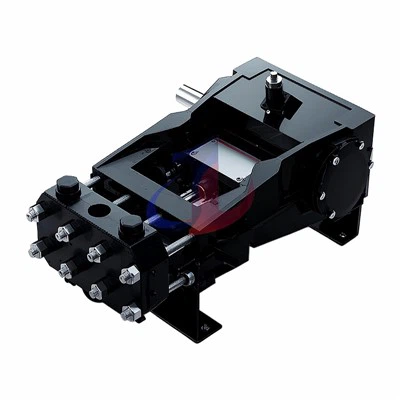
DL FR-50 GPM COMP HDD Pump
DL FR-50 GPM COMP High-Pressure Plunger Pump: Superior Performance, Robust DurabilityThe DL FR-50 GPM COMP is a newly

DL BEAN FR-70GPM HD HDD Pump
The DL FR-70 GPM HD high-pressure plunger pump is not just a power unit; it's a critical partner in ensuring your

NOV 14-P-220 OME 7500PSI Mud Pump
The power end is the heart of the Mud Pump, and its design and manufacturing quality directly determines the

NOV JWS-400 Caged Valves Pump
The NOV JWS-400 (cage valve) three-cylinder reciprocating workover pump is a strategic solution engineered to address

NOV JWS-340 Special Pump
JWS-340 SPECIAL is a reciprocating triplex pump designed for intermittent high-pressure operation. Its core performance

DL Sentinel Type C Reset Safety Valve
The trigger mechanism of the Titan C safety valve ingeniously employs the lever principle of a balance beam, which is

DL Safe-Set Hammerless Liner Retainer
Black-JAK Core Technology Analysis: The Engineering Basis of Superior Performance

DL Sentinel Type RRV 3 Inch 8000 PSl Reset Safety Valve
The core mechanism of this valve lies in its pop-action pressure relief capability. When pipeline pressure exceeds a